Michelle Elisabeth, PhD in Computer Science (since january 2025) –A Generic and Model-Agnostic Evaluation Framework for Task-Oriented Dialogue – PhD funded by the ANRT (CIFRE with the Orange company)
Previous supervisions
PhD and Post-doc
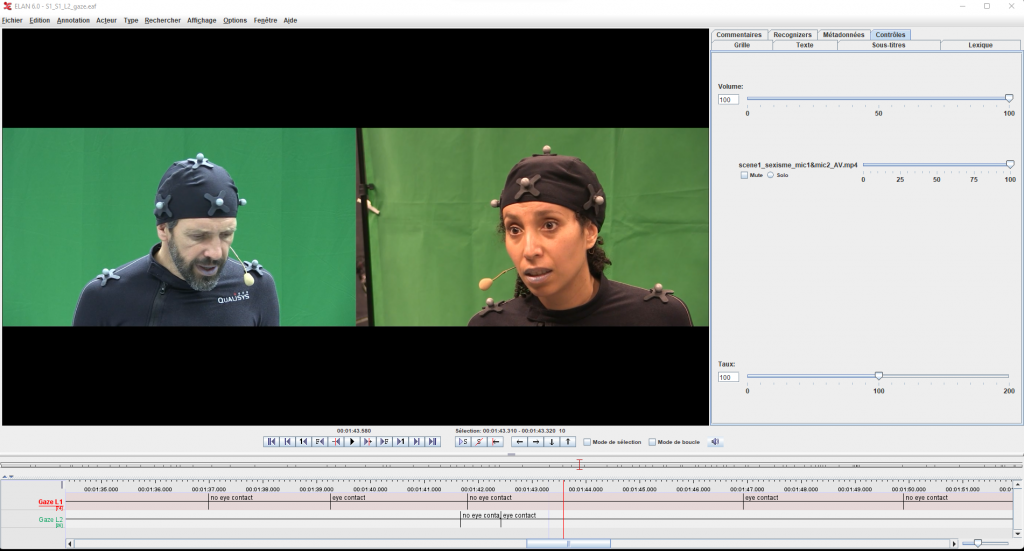
Alice Delbosc, PhD in Computer Science (January 2023 – February 2026) – co-supervision with Stéphane Ayache, (LIS), Brian Ravenet (LISN) and Nicolas Sabouret (LISN) – Training in conflict management in the workplace through simulation with animated conversational agents– PhD funded by the ANRT (CIFRE with the DAVI company)
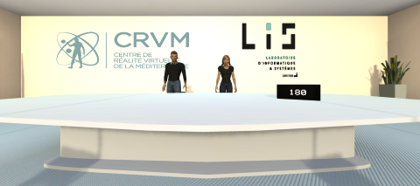
Marion Ristorcelli, PhD in Computer Science (Nov. 2022 – Nov 2025) – co-supervision with Remy Casanova, (ISM, CRVM) – Virtual behavioral skills Training for public Speaking- PhD funded by the national ANR project REVITALISE
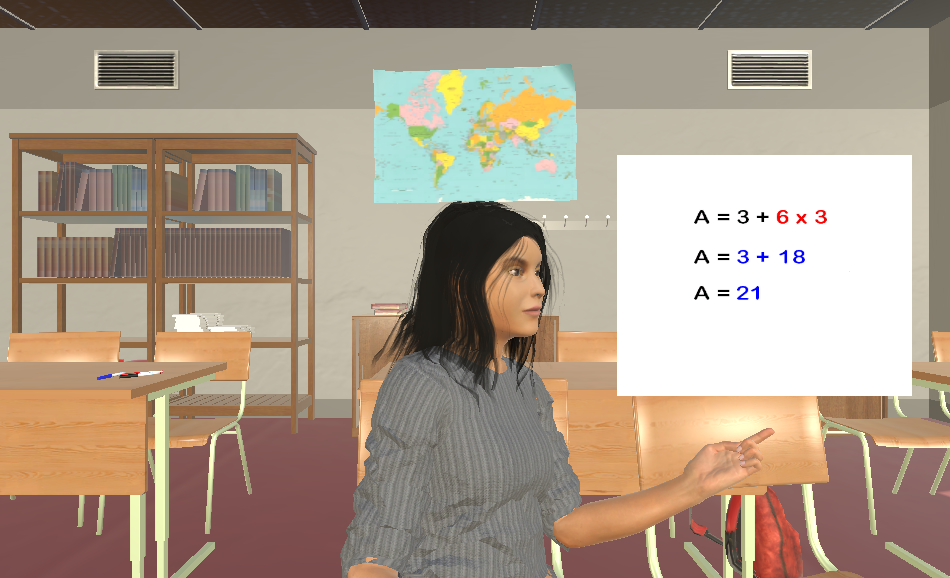
Marjorie Armando, PhD in Computer Science (Oct. 2020 – June 2024) – co-supervision with Isabelle Regner – ANTI-STEREOTYPE: Améliorer les performaNces de l’enfanT apprenant à travers un compagnon vIrtuel d’Apprentissage écartant la menace du STEREOTYPE. – PhD funded by a grant from the national project AMPIRIC
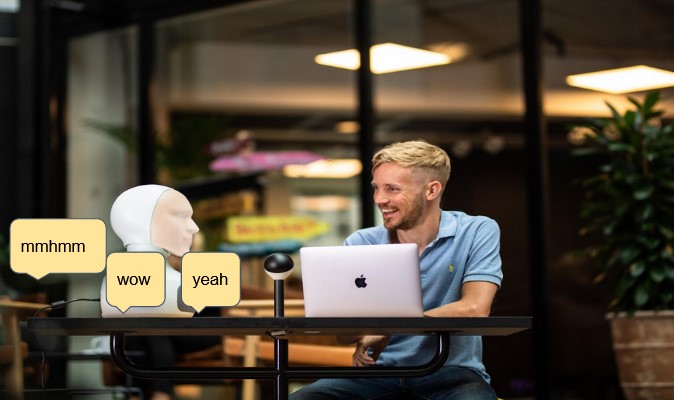
Auriane Boudin, PhD in Linguistic (sept. 2021 – nov. 2024) – co-supervision with Roxane Bertrand, Philippe Blache, and Stepahen Rauzy, Les feedbacks en interaction : un modèle naturel et son adaptation computationnelle pour une interaction humain/machine – PhD funded by an ILCB grant.
Carol Figueroa, PhD in Computer Science (January 2021 – Dec. 2024) – co-supervision with Gabriel Skantze (Furhat Company)Gender and vocal alignment in speakers and robots – PhD of the ITN European project (Innovative Training Network)COBRA
Afef Cherni, Post-doc in Computer Science (2021-2022) – co-supervision with Roxane Bertrand – Machine Learning of the multimodal cues of persuasion – Post-doc funded on the ANR project COPAINS
Hmamouche youssef, Post-doc in Computer Science (2 years – 2019-2021) – co-supervision with Laurent Prévot – Computational model of conversational behaviors integrating behavioral and physiologicaldata from human-human and human-machine interactions, Post-doc funded on the national interdisciplinary project A*MIDEX (projet d’initiative d’excellence Aix-Marseille Université)
Gael Guibon, PhD in Computer Science (2016-2019) – co-supervision with Patrice BellotRecommandation automatique, temps réel et adaptative d’emojis – PhD funded by ANRT (thèse CIFRE) with the company Caléa – Defended thesis: March 2019
Bruno Penteado,PhD in Computer Science – University of São Paulo – Modèle de prediction automatique de feedbacks d’agent virtuel
Florian Pecune, PhD in Computer Science (2012-2016) – co-supervision withCatherine Pelachaud, Modélisation de la prise de décision des compagnons artificiels dans différents contextes d’interaction sociale – Projet ANR MOCA– Defended thesis: 29 September 2016
Brian Ravenet, PhD in Computer Science (2012-2015) – co-supervision with Catherine Pelachaud – Modélisation des relations sociales d’un agent autonome dans les environnements virtuels – European Project REVERIE – Defended thesis: 7 December 2015
Mathieu Chollet, PhD in Computer Science (2011-2015) – co-supervision withCatherine Pelachaud – Modélisation de stratégies socio-émotionnelles à travers le comportement non-verbal d’un personnage virtuel: le cas du recruteur virtuel – European Project TARDIS – Defended thesis: 21 April 2015
Master
Alice Delbosc, Master 2 in Computer Science (Master IAAA), 2022 Aix-Marseille Université – co-supervision with Stéphane Ayache, Automatic genration of social behaviors with GANs
Emma Gallego, Master 2 in Ergonomy (Master Facteurs humains et ingénierie des systèmes d’information) 2022 Aix-Marseille Université – Evaluation of the impact of virtual audience’s social attitudes on public speaking
Aurianne Boudin, Master 2 in Cognitive Science (Master Masco), 2021, Aix-Marseille Université – co-supervision with Roxane Bertrand – De la détection des signaux sociaux des médecins à un modèle computationnel des feedbacks pour un patient artificiel
Sabrine Oucherif, Master 2 in Computer Science– 2021 – co-supervision with Jean-Marie Pergandi (IR CNRS CRVM) Développement et Intégration d’un modèle computationnel de comportements socio-émotionnels dans une plateforme de réalité virtuelle pour l’apprentissage de la prise de parole en public
Lorenn Contini, Master 2 in Sociology« Recherche action » : Analyse qualitative et quantitative des freins à la parité au Laboratoire d’Informatique et de Systèmes (LIS)
Jéremie Boursquet, Master 2 in Computer Science (Master IAAA), 2019, Prediction automatique du sentiment de présence et co-présence en réalité virtuelle – co-supervision with Philippe Blache
Sameer Jain, Master 2 in Computer Science – 2018 – co-supervision with Philippe Blache – Prediction automatique du sentiment de presence et co-presence pour la formation des médecins en réalité virtuelle
Cris Kevin Porhet, Master 2in Computer Science – 2017 – co-supervision withRoxanne Bertrand , Phillippe Blache and Grégoire de Montcheuil De la fouille de données d’interaction médecin-patient à un modèle computationnel des feedbacks pour un patient virtuel
Florian Verneuil, Master 1 in Ergonomy (Master Facteurs humains et ingénierie des systèmes d’information) – 2017- Comparaison des comportements et de la perception des individus dans une interaction avec un patient virtuel avec différents dispositifs immersifs
Nathan Lieberman, Master 2 in Computer Science– 2016 – co-supervision withThierry Chaminade (Institut de Neuroscience de la Timone)Analyse automatique des signaux socio-emotionnels dans les interactions humain-machine
Florian Pecune, Master 2in Cognitive Science (“Ingénierie et Cognition”), Université Paris 8- 2012 – co-supervision with Catherine Pelachaud, Amélioration du modèle computationnel d’émotions FATIMA : modélisation d’attitudes sociales et des effets des émotions sur les actions
Roman Miletitch, Master 2in Computer Science – Université Paris 6 -2010 – co-supervision with Nicolas Sabouret Susciter l’émotion dans la narration automatique